Few home décor pieces carry as much history, artistry, and cultural resonance as rugs and kilims. Woven with patience and precision, these floor coverings are living testaments to human ingenuity—each thread telling a story of migration, trade, and the creative spark passed down through generations. In this comprehensive exploration, we’ll trace the evolution of rugs and kilims across millennia, uncovering how they became treasured heirlooms and global design icons.
1. Origins in Antiquity: Threads of Civilization
1.1 Earliest Evidence
Archaeological finds suggest that nomadic tribes in Central Asia were weaving pile rugs as early as 2500 BCE. Fragile remnants unearthed in grave mounds of the Pazyryk Valley (modern-day Siberia) reveal vibrant reds and intricate patterns—indicating advanced dyeing and knotting techniques far earlier than once believed.
1.2 The Rise of Flatweaves
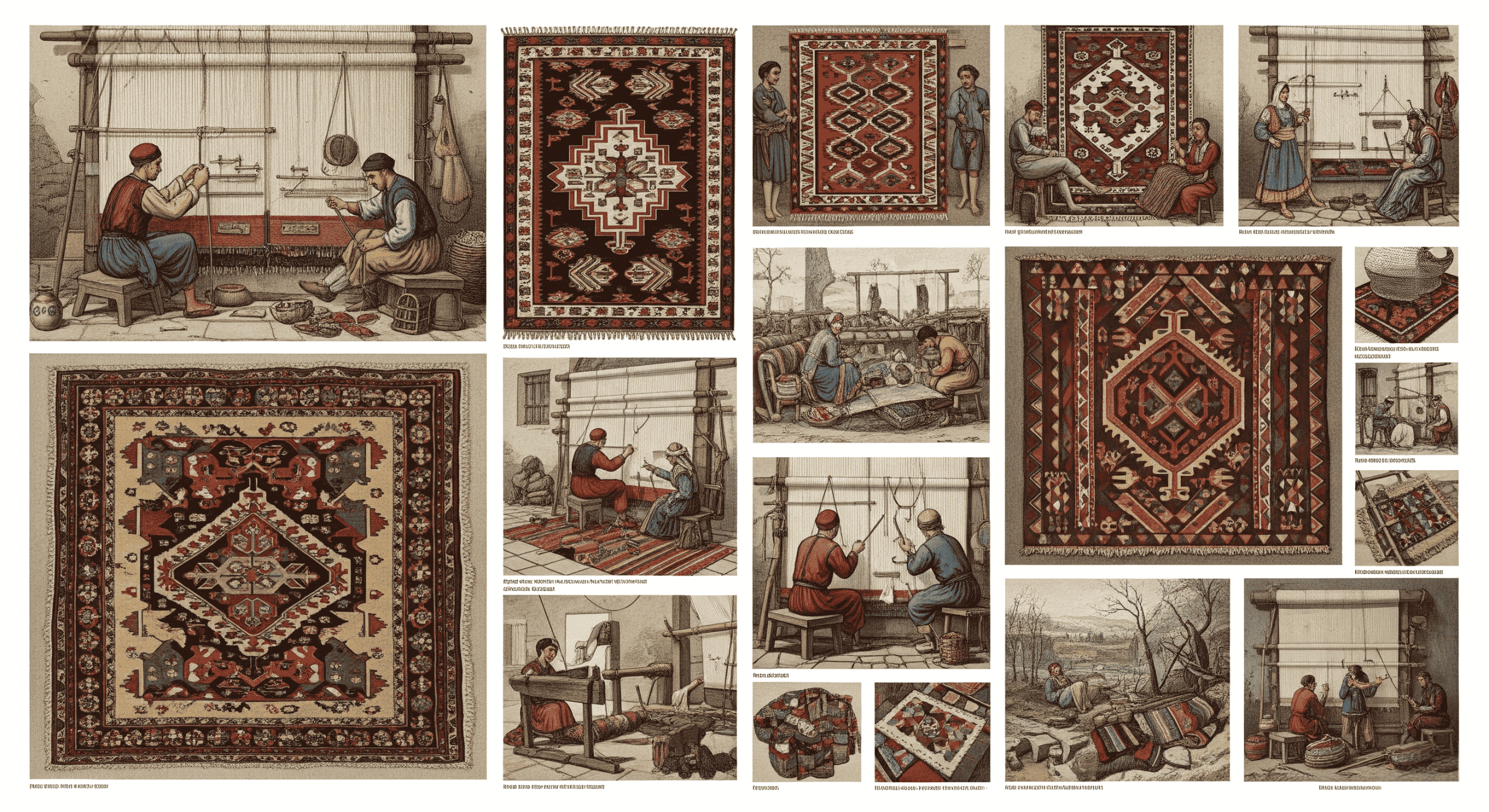
Parallel to pile weaving, ancient communities developed flatweave techniques—the precursor to today’s kilims. By tightly interlacing vertical warp and horizontal weft threads, artisans created reversible, durable textiles suitable for nomadic life. These early flatweaves served as floor coverings, storage sacks, and even tent walls.
2. The Persian Golden Age: Artistry & Royal Patronage
2.1 Persia as a Weaving Epicenter
Between the 10th and 16th centuries CE, the Persian Empire emerged as the epicenter of rug artistry. Sultans and shahs commissioned lavish Persian carpets, elevating the craft to high art. Workshops in Tabriz, Kashan, and Isfahan produced masterpieces characterized by:
- Central medallions framed by intricate borders
- Curvilinear floral motifs inspired by garden paradises
- Silk and fine wool for shimmering surfaces
2.2 Kilims in Persian Culture
While pile rugs adorned palace halls, kilims thrived in rural villages. Often woven by women, these flatweaves featured bold geometric motifs—diamonds, hooks, and lozenges—each symbol conveying wishes for fertility, protection, or prosperity. They functioned as bed covers, dowry pieces, and everyday floor mats.
3. Anatolian & Caucasian Traditions: Regional Distinctiveness
3.1 Anatolian Weaving Hubs
Across the Byzantine and Ottoman eras, Anatolia (modern Turkey) developed its own weaving lexicon. Towns like Konya, Bergama, and Oushak became famous for:
- Oushak rugs with large-scale floral patterns and soft color palettes
- Konya kilims boasting double-sided weaves and striking reds
Ottoman patronage further refined pile techniques, introducing ultra-fine knot counts and luxurious silk accents.
3.2 Caucasian Kilims & Rugs
In the mountainous Caucasus region, tribal weavers from Shirvan, Karabagh, and Kuba produced both pile rugs and flatwoven kilims. Their hallmarks include:
- Vibrant primary colors—crimson, cobalt, emerald
- Bold, angular motifs—ram’s horns, stylized animals, suns
- Robust construction—ideal for high-traffic areas in yurts and homes
These pieces later captivated European collectors in the 19th century, fueling the Oriental rug craze.
4. The European Boom & Industrial Era
4.1 19th‑Century Orient Mania
With the expansion of trade routes, European aristocracy fell in love with Oriental rugs. Inventories of famed houses like Cartier and Beers of London catalogued Persian, Anatolian, and Caucasian pieces at premium prices. Museums—including the Victoria & Albert in London—began acquiring them, cementing their status as objects of fine art.
4.2 Mechanization & Mass Production
The Industrial Revolution introduced power looms to Europe, enabling machine‑made “Oriental” rugs at lower cost. While accessible, these factory wares lacked the subtle irregularities and soul of handwoven originals. By the late 20th century, a resurgence of appreciation for artisanal methods led to a revival in traditional weaving.
5. Modern Revival: Global Appreciation & Contemporary Design
5.1 Renewed Artisan Empowerment
In recent decades, cooperatives in Iran, Turkey, Afghanistan, and Central Asia have re‑energized rug and kilim production—often guided by fair‑trade principles. Designers collaborate directly with villages to create limited‑edition collections, marrying historic patterns with modern colorways.
5.2 Kilims & Rugs in Today’s Interiors
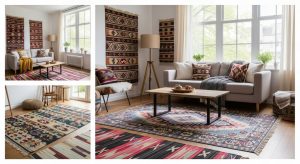
From minimalist lofts to eclectic boho spaces, kilims add:
- Texture & warmth: grounding open‑plan rooms
- Layered dimension: placed atop neutral rugs for visual interest
- Cultural storytelling: introducing global craftsmanship to every corner
Eastern traditional motifs have been reinterpreted by Western designers, making kilims and pile rugs staples in luxury hotels, offices, and private residences alike.
6. Weaving Techniques Through the Ages
| Technique | Region of Origin | Characteristics & Uses |
|---|---|---|
| Symmetrical (Turkish) Knot | Anatolia | Double‑knot for durability; common in kilims and pile rugs. |
| Asymmetrical (Persian) Knot | Persia | Single‑knot allowing finer detail and curvilinear patterns. |
| Soumak Weave | Caucasus | Embroidered flatweave for embossed, textured motifs. |
| Kilim Weave | Nomadic Asia | Interlocking warp/weft for reversible, lightweight textiles. |
7. Cultural & Symbolic Significance
7.1 Motif Meanings
- Elibelinde (hands on hips): Symbolizes fertility and motherhood.
- Ram’s Horn: Represents masculinity, strength, and heroism.
- Tree of Life: Denotes growth, immortality, and spiritual connection.
7.2 Rituals & Traditions
- Dowry Presentation: Kilims often formed part of a bride’s trousseau, showcasing her family’s status and skill.
- Hospitality Rugs: In many cultures, unrolling a prized rug for guests is a gesture of honor and welcome.
8. Caring for Your Heritage Pieces
- Gentle Vacuuming: Use low suction and no brush roll to preserve fibers.
- Rotate Regularly: Ensure even wear and color exposure.
- Professional Cleaning: Every 3–5 years, choose specialists in natural dyes and handwoven textiles.
- Climate Awareness: Avoid extreme humidity or direct sunlight to prevent mold and fading.
Conclusion: Threads That Bind Us Across Time
From the high‑knotted palaces of ancient Persia to the sunlit studios of today’s weavers, rugs and kilims have traversed continents and centuries—carrying within their warp and weft the collective stories of humankind. When you welcome a handwoven rug into your home, you’re not just adding décor—you’re honoring traditions, supporting artisans, and weaving your own chapter into a legacy that began over 4,000 years ago.
Ready to begin your journey?
- Explore our curated collections of authentic kilims and Persian‑style rugs.
- Subscribe for in‑depth articles on weaving traditions, styling tips, and exclusive artisan interviews.
- Join our community of rug enthusiasts and bring the timeless art of weaving into your space.